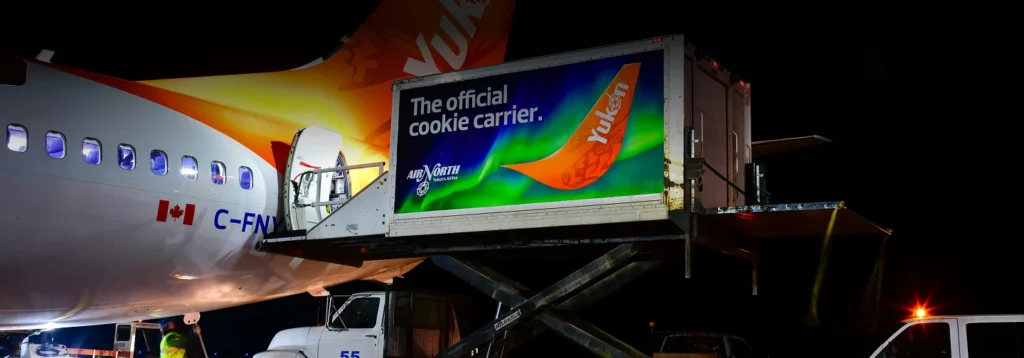
Oversized & Special Cargo
Whether you’re shipping oversized equipment, specialized freight, or time-sensitive items, our team has the experience to help. With decades of serving northern communities, we’ve handled everything from industrial equipment and vehicles to perishable goods and unique shipments that require extra care.
Every shipment is different, and we’re here to help you find the safest and most efficient way to get it where it needs to go.
Perishable Goods
With plenty of experience serving northern communities, we’ve become experts in transporting chilled and frozen products. From fresh seafood and produce to medical supplies and floral shipments, we understand that proper handling is essential every step of the way.
Perishable Cargo requires careful packaging and timely transportation to help maintain its quality throughout the journey. Common perishable shipments include:
- Produce
- Seafood
- Floral products
- Fruits
- Medical supplies
- Water samples
Because these items are sensitive to temperature and transit times, all perishable shipments must travel as Priority Cargo. This ensures they receive the expedited handling and attention needed to arrive in the best possible condition.
Learn more about shipping perishable goods and how you should pack them here.
Packaging Regulations
We’ve developed these requirements to help ensure your shipment arrives safely and in the condition you expect. While our team takes great care in handling all cargo to help protect against leakage, spillage, and contamination from other shipments, perishable goods must be properly packaged to withstand the conditions of air transport.
Perishable shipments should be packaged to endure:
- Up to 48 hours of domestic transit time (if connecting to another carrier to travel beyond our network within Canada).
- Up to 12 physical handling points.
- Pressure of up to 60 lbs. per square foot.
- Movement across various surfaces, including sliding during handling.
- A drop of up to 12 inches onto a hard surface.
- Exposure to rain for up to 30 seconds.
Please note that Styrofoam outer packaging is not accepted.
Learn more about shipping perishable goods and how you should pack them here.
Shipping Guidelines
A little planning goes a long way when shipping perishable items. Since drop-off and pick-up times vary by location, we recommend contacting your local Cargo office in advance. Refrigerated storage is available at select stations, subject to space, but cannot be guaranteed. To help avoid delays, please ensure your shipment can be picked up during the destination office’s regular business hours.
Compassionate Transportation
During difficult times, our Cargo team is here to provide caring and professional support when transporting departed loved ones to their final resting place.
We work closely with funeral homes and mortuaries to ensure arrangements are handled with dignity and care. Through our Compassionate Travel program, arrangements can also be made for family members to travel on the same flight whenever possible.
For assistance, please contact your funeral director or mortuary, or reach out to our Cargo team directly.
Cargo Screening
Transport Canada requires that all Cargo travelling on passenger flights through CATSA-regulated airports be screened. In our network, this applies to Whitehorse, Vancouver, Kelowna, Calgary, Edmonton, and Yellowknife. What this means for your shipment:
- From CATSA locations: Cargo must either be shipped by a Known Consignor (businesses only) or be screened by Air North Cargo upon receipt, in accordance with regulations.
- From non-CATSA locations: Screening is generally not required for direct shipments between non-CATSA airports (e.g., Dawson City to Whitehorse). However, if your shipment connects through a CATSA-regulated airport (e.g., Dawson City to Vancouver via Whitehorse), it will be screened in transit before continuing to its final destination.
Known Consignors (Businesses Only)
Businesses may apply to become a Known Consignor through Transport Canada’s Air Cargo Security (ACS) program. A valid Canada Revenue Agency (CRA) business number and an established business relationship with a freight forwarder or airline are required.
For all other shippers, if you are not a Known Consignor, your shipment must be screened or physically searched before acceptance. A security screening fee applies of $10 + applicable taxes, or $0.10 per pound per waybill (whichever is greater).
For regulatory questions, you may also refer to Transport Canada’s Air Cargo Security (ACS) program.
Dangerous Goods
Dangerous goods are articles or substances that may pose a risk to health, safety, or property when transported by air. To help protect our travellers, crews, aircraft, and communities, these items are regulated by the International Air Transport Association (IATA) and Transport Canada, which classify dangerous goods into nine categories. Please refer to the table below for the different classes
Please note that Air North does not accept shipments containing infectious substances or radioactive materials.
Shipping Dangerous Goods
If you are shipping dangerous goods, it is important that all applicable regulations are followed. Before offering a shipment for air transport, shippers are responsible for ensuring that:
- The item is permitted for transportation by air.
- The goods are properly identified, classified, packaged, marked, labelled, and documented.
- Everyone involved in preparing the shipment has received the appropriate dangerous goods training.
- Dangerous goods are properly declared using a completed IATA Shipper’s Declaration, where required.
Failure to properly declare dangerous goods is a serious offence. It is the shipper’s responsibility to determine whether a shipment contains dangerous goods and to ensure all requirements are met.
Additional information can be found on the table below, and here.
For information regarding lithium batteries, please visit this guide here.
Dangerous Goods To Limited Access Communities
Some northern communities rely exclusively on air service for essential supplies. Old Crow (YOC), for example, is considered a limited access community because it is only accessible by air.
To help support these communities, certain dangerous goods may qualify for exemptions from some standard regulations, making it possible to transport essential items safely and affordably when other shipping options are not available.
A list of dangerous goods eligible under the limited access provisions can be found here.
If you have questions about shipping dangerous goods or are unsure whether your shipment qualifies, our knowledgeable Cargo team is available to help.
Class Description Class 1 Explosives Class 2 Gas
Class 3 Flammable liquids
Class 4 Flammable solids
Class 5 Oxidizing substances and organic peroxides
Class 6 Poisonous (toxic) and infectious substances (infectious not accepted)
Class 7 Radioactive materials (radioactive not accepted)
Class 8 Corrosives
Class 9 Miscellaneous articles and substances: asbestos; dry ice; environmentally hazardous substances; life saving devices; machines incorporating internal combustion engines; magnetized material; polymeric beads; self-propelled vehicles; zinc dithionite; any liquid or solid which has anesthetic, noxious or other similar properties which could cause extreme annoyance or discomfort to passengers and/or flight crew members.
With plenty of experience serving northern communities, we’ve become experts in transporting chilled and frozen products. From fresh seafood and produce to medical supplies and floral shipments, we understand that proper handling is essential every step of the way.
Perishable Cargo requires careful packaging and timely transportation to help maintain its quality throughout the journey. Common perishable shipments include:
- Produce
- Seafood
- Floral products
- Fruits
- Medical supplies
- Water samples
Because these items are sensitive to temperature and transit times, all perishable shipments must travel as Priority Cargo. This ensures they receive the expedited handling and attention needed to arrive in the best possible condition.
Learn more about shipping perishable goods and how you should pack them here.
Packaging Regulations
We’ve developed these requirements to help ensure your shipment arrives safely and in the condition you expect. While our team takes great care in handling all cargo to help protect against leakage, spillage, and contamination from other shipments, perishable goods must be properly packaged to withstand the conditions of air transport.
Perishable shipments should be packaged to endure:
- Up to 48 hours of domestic transit time (if connecting to another carrier to travel beyond our network within Canada).
- Up to 12 physical handling points.
- Pressure of up to 60 lbs. per square foot.
- Movement across various surfaces, including sliding during handling.
- A drop of up to 12 inches onto a hard surface.
- Exposure to rain for up to 30 seconds.
Please note that Styrofoam outer packaging is not accepted.
Learn more about shipping perishable goods and how you should pack them here.
Shipping Guidelines
A little planning goes a long way when shipping perishable items. Since drop-off and pick-up times vary by location, we recommend contacting your local Cargo office in advance. Refrigerated storage is available at select stations, subject to space, but cannot be guaranteed. To help avoid delays, please ensure your shipment can be picked up during the destination office’s regular business hours.
Compassionate Transportation
During difficult times, our Cargo team is here to provide caring and professional support when transporting departed loved ones to their final resting place.
We work closely with funeral homes and mortuaries to ensure arrangements are handled with dignity and care. Through our Compassionate Travel program, arrangements can also be made for family members to travel on the same flight whenever possible.
For assistance, please contact your funeral director or mortuary, or reach out to our Cargo team directly.
Cargo Screening
Transport Canada requires that all Cargo travelling on passenger flights through CATSA-regulated airports be screened. In our network, this applies to Whitehorse, Vancouver, Kelowna, Calgary, Edmonton, and Yellowknife. What this means for your shipment:
- From CATSA locations: Cargo must either be shipped by a Known Consignor (businesses only) or be screened by Air North Cargo upon receipt, in accordance with regulations.
- From non-CATSA locations: Screening is generally not required for direct shipments between non-CATSA airports (e.g., Dawson City to Whitehorse). However, if your shipment connects through a CATSA-regulated airport (e.g., Dawson City to Vancouver via Whitehorse), it will be screened in transit before continuing to its final destination.
Known Consignors (Businesses Only)
Businesses may apply to become a Known Consignor through Transport Canada’s Air Cargo Security (ACS) program. A valid Canada Revenue Agency (CRA) business number and an established business relationship with a freight forwarder or airline are required.
For all other shippers, if you are not a Known Consignor, your shipment must be screened or physically searched before acceptance. A security screening fee applies of $10 + applicable taxes, or $0.10 per pound per waybill (whichever is greater).
For regulatory questions, you may also refer to Transport Canada’s Air Cargo Security (ACS) program.
Dangerous Goods
Dangerous goods are articles or substances that may pose a risk to health, safety, or property when transported by air. To help protect our travellers, crews, aircraft, and communities, these items are regulated by the International Air Transport Association (IATA) and Transport Canada, which classify dangerous goods into nine categories. Please refer to the table below for the different classes
Please note that Air North does not accept shipments containing infectious substances or radioactive materials.
Shipping Dangerous Goods
If you are shipping dangerous goods, it is important that all applicable regulations are followed. Before offering a shipment for air transport, shippers are responsible for ensuring that:
- The item is permitted for transportation by air.
- The goods are properly identified, classified, packaged, marked, labelled, and documented.
- Everyone involved in preparing the shipment has received the appropriate dangerous goods training.
- Dangerous goods are properly declared using a completed IATA Shipper’s Declaration, where required.
Failure to properly declare dangerous goods is a serious offence. It is the shipper’s responsibility to determine whether a shipment contains dangerous goods and to ensure all requirements are met.
Additional information can be found on the table below, and here.
For information regarding lithium batteries, please visit this guide here.
Dangerous Goods To Limited Access Communities
Some northern communities rely exclusively on air service for essential supplies. Old Crow (YOC), for example, is considered a limited access community because it is only accessible by air.
To help support these communities, certain dangerous goods may qualify for exemptions from some standard regulations, making it possible to transport essential items safely and affordably when other shipping options are not available.
A list of dangerous goods eligible under the limited access provisions can be found here.
If you have questions about shipping dangerous goods or are unsure whether your shipment qualifies, our knowledgeable Cargo team is available to help.
Class Description Class 1 Explosives Class 2 Gas
Class 3 Flammable liquids
Class 4 Flammable solids
Class 5 Oxidizing substances and organic peroxides
Class 6 Poisonous (toxic) and infectious substances (infectious not accepted)
Class 7 Radioactive materials (radioactive not accepted)
Class 8 Corrosives
Class 9 Miscellaneous articles and substances: asbestos; dry ice; environmentally hazardous substances; life saving devices; machines incorporating internal combustion engines; magnetized material; polymeric beads; self-propelled vehicles; zinc dithionite; any liquid or solid which has anesthetic, noxious or other similar properties which could cause extreme annoyance or discomfort to passengers and/or flight crew members.
A little planning goes a long way when shipping perishable items. Since drop-off and pick-up times vary by location, we recommend contacting your local Cargo office in advance. Refrigerated storage is available at select stations, subject to space, but cannot be guaranteed. To help avoid delays, please ensure your shipment can be picked up during the destination office’s regular business hours.
Compassionate Transportation
During difficult times, our Cargo team is here to provide caring and professional support when transporting departed loved ones to their final resting place.
We work closely with funeral homes and mortuaries to ensure arrangements are handled with dignity and care. Through our Compassionate Travel program, arrangements can also be made for family members to travel on the same flight whenever possible.
For assistance, please contact your funeral director or mortuary, or reach out to our Cargo team directly.
Cargo Screening
Transport Canada requires that all Cargo travelling on passenger flights through CATSA-regulated airports be screened. In our network, this applies to Whitehorse, Vancouver, Kelowna, Calgary, Edmonton, and Yellowknife. What this means for your shipment:
- From CATSA locations: Cargo must either be shipped by a Known Consignor (businesses only) or be screened by Air North Cargo upon receipt, in accordance with regulations.
- From non-CATSA locations: Screening is generally not required for direct shipments between non-CATSA airports (e.g., Dawson City to Whitehorse). However, if your shipment connects through a CATSA-regulated airport (e.g., Dawson City to Vancouver via Whitehorse), it will be screened in transit before continuing to its final destination.
Known Consignors (Businesses Only)
Businesses may apply to become a Known Consignor through Transport Canada’s Air Cargo Security (ACS) program. A valid Canada Revenue Agency (CRA) business number and an established business relationship with a freight forwarder or airline are required.
For all other shippers, if you are not a Known Consignor, your shipment must be screened or physically searched before acceptance. A security screening fee applies of $10 + applicable taxes, or $0.10 per pound per waybill (whichever is greater).
For regulatory questions, you may also refer to Transport Canada’s Air Cargo Security (ACS) program.
Dangerous Goods
Dangerous goods are articles or substances that may pose a risk to health, safety, or property when transported by air. To help protect our travellers, crews, aircraft, and communities, these items are regulated by the International Air Transport Association (IATA) and Transport Canada, which classify dangerous goods into nine categories. Please refer to the table below for the different classes
Please note that Air North does not accept shipments containing infectious substances or radioactive materials.
Shipping Dangerous Goods
If you are shipping dangerous goods, it is important that all applicable regulations are followed. Before offering a shipment for air transport, shippers are responsible for ensuring that:
- The item is permitted for transportation by air.
- The goods are properly identified, classified, packaged, marked, labelled, and documented.
- Everyone involved in preparing the shipment has received the appropriate dangerous goods training.
- Dangerous goods are properly declared using a completed IATA Shipper’s Declaration, where required.
Failure to properly declare dangerous goods is a serious offence. It is the shipper’s responsibility to determine whether a shipment contains dangerous goods and to ensure all requirements are met.
Additional information can be found on the table below, and here.
For information regarding lithium batteries, please visit this guide here.
Dangerous Goods To Limited Access Communities
Some northern communities rely exclusively on air service for essential supplies. Old Crow (YOC), for example, is considered a limited access community because it is only accessible by air.
To help support these communities, certain dangerous goods may qualify for exemptions from some standard regulations, making it possible to transport essential items safely and affordably when other shipping options are not available.
A list of dangerous goods eligible under the limited access provisions can be found here.
If you have questions about shipping dangerous goods or are unsure whether your shipment qualifies, our knowledgeable Cargo team is available to help.
Class Description Class 1 Explosives Class 2 Gas
Class 3 Flammable liquids
Class 4 Flammable solids
Class 5 Oxidizing substances and organic peroxides
Class 6 Poisonous (toxic) and infectious substances (infectious not accepted)
Class 7 Radioactive materials (radioactive not accepted)
Class 8 Corrosives
Class 9 Miscellaneous articles and substances: asbestos; dry ice; environmentally hazardous substances; life saving devices; machines incorporating internal combustion engines; magnetized material; polymeric beads; self-propelled vehicles; zinc dithionite; any liquid or solid which has anesthetic, noxious or other similar properties which could cause extreme annoyance or discomfort to passengers and/or flight crew members.
Transport Canada requires that all Cargo travelling on passenger flights through CATSA-regulated airports be screened. In our network, this applies to Whitehorse, Vancouver, Kelowna, Calgary, Edmonton, and Yellowknife. What this means for your shipment:
- From CATSA locations: Cargo must either be shipped by a Known Consignor (businesses only) or be screened by Air North Cargo upon receipt, in accordance with regulations.
- From non-CATSA locations: Screening is generally not required for direct shipments between non-CATSA airports (e.g., Dawson City to Whitehorse). However, if your shipment connects through a CATSA-regulated airport (e.g., Dawson City to Vancouver via Whitehorse), it will be screened in transit before continuing to its final destination.
Known Consignors (Businesses Only)
Businesses may apply to become a Known Consignor through Transport Canada’s Air Cargo Security (ACS) program. A valid Canada Revenue Agency (CRA) business number and an established business relationship with a freight forwarder or airline are required.
For all other shippers, if you are not a Known Consignor, your shipment must be screened or physically searched before acceptance. A security screening fee applies of $10 + applicable taxes, or $0.10 per pound per waybill (whichever is greater).
For regulatory questions, you may also refer to Transport Canada’s Air Cargo Security (ACS) program.
Dangerous Goods
Dangerous goods are articles or substances that may pose a risk to health, safety, or property when transported by air. To help protect our travellers, crews, aircraft, and communities, these items are regulated by the International Air Transport Association (IATA) and Transport Canada, which classify dangerous goods into nine categories. Please refer to the table below for the different classes
Please note that Air North does not accept shipments containing infectious substances or radioactive materials.
Shipping Dangerous Goods
If you are shipping dangerous goods, it is important that all applicable regulations are followed. Before offering a shipment for air transport, shippers are responsible for ensuring that:
- The item is permitted for transportation by air.
- The goods are properly identified, classified, packaged, marked, labelled, and documented.
- Everyone involved in preparing the shipment has received the appropriate dangerous goods training.
- Dangerous goods are properly declared using a completed IATA Shipper’s Declaration, where required.
Failure to properly declare dangerous goods is a serious offence. It is the shipper’s responsibility to determine whether a shipment contains dangerous goods and to ensure all requirements are met.
Additional information can be found on the table below, and here.
For information regarding lithium batteries, please visit this guide here.
Dangerous Goods To Limited Access Communities
Some northern communities rely exclusively on air service for essential supplies. Old Crow (YOC), for example, is considered a limited access community because it is only accessible by air.
To help support these communities, certain dangerous goods may qualify for exemptions from some standard regulations, making it possible to transport essential items safely and affordably when other shipping options are not available.
A list of dangerous goods eligible under the limited access provisions can be found here.
If you have questions about shipping dangerous goods or are unsure whether your shipment qualifies, our knowledgeable Cargo team is available to help.
Class | Description |
|---|---|
Class 1 | Explosives |
Class 2 | Gas |
Class 3 | Flammable liquids |
Class 4 | Flammable solids |
Class 5 | Oxidizing substances and organic peroxides |
Class 6 | Poisonous (toxic) and infectious substances (infectious not accepted) |
Class 7 | Radioactive materials (radioactive not accepted) |
Class 8 | Corrosives |
Class 9 | Miscellaneous articles and substances: asbestos; dry ice; environmentally hazardous substances; life saving devices; machines incorporating internal combustion engines; magnetized material; polymeric beads; self-propelled vehicles; zinc dithionite; any liquid or solid which has anesthetic, noxious or other similar properties which could cause extreme annoyance or discomfort to passengers and/or flight crew members. |
Contact Our Cargo Team
Whether you’re shipping for the first time or have questions about rates, schedules, routing or special items, our Cargo team is here to help every step of the way.
Call Us
- 867.668.2228 ext. 2
- 1.800.661.0407 ext. 2
Cargo Terminal Hours
Cargo operating hours vary by airport. Select your airport here to view local Cargo hours and contact information.